What Is the Condition Treated by a Tummy Tuck?
Abdominal laxity refers to loose, sagging skin and weakened or separated abdominal muscles in the stomach area. This commonly happens after pregnancy, major weight loss, or aging. In many cases, diet and exercise cannot tighten this excess skin or repair muscle separation.
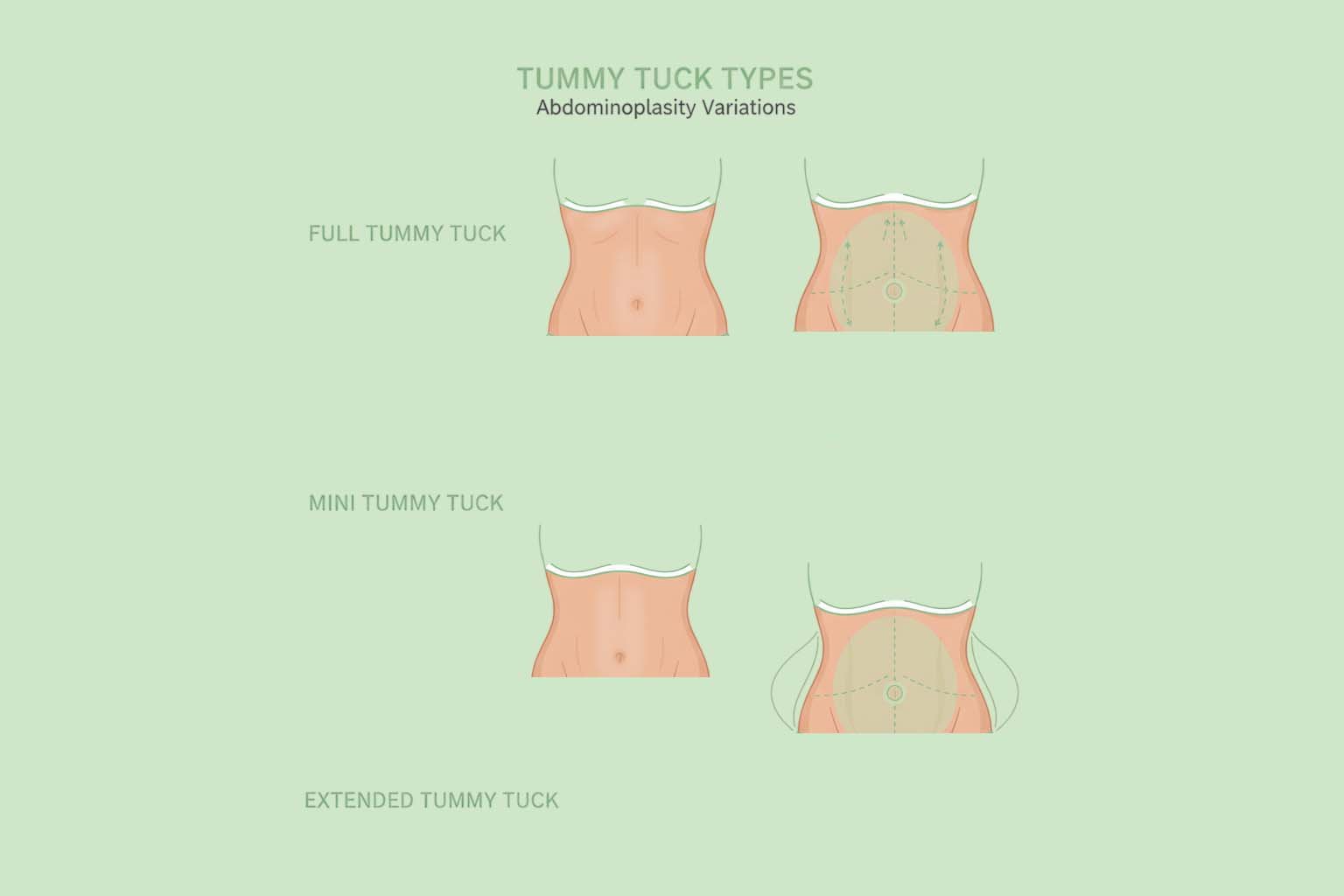
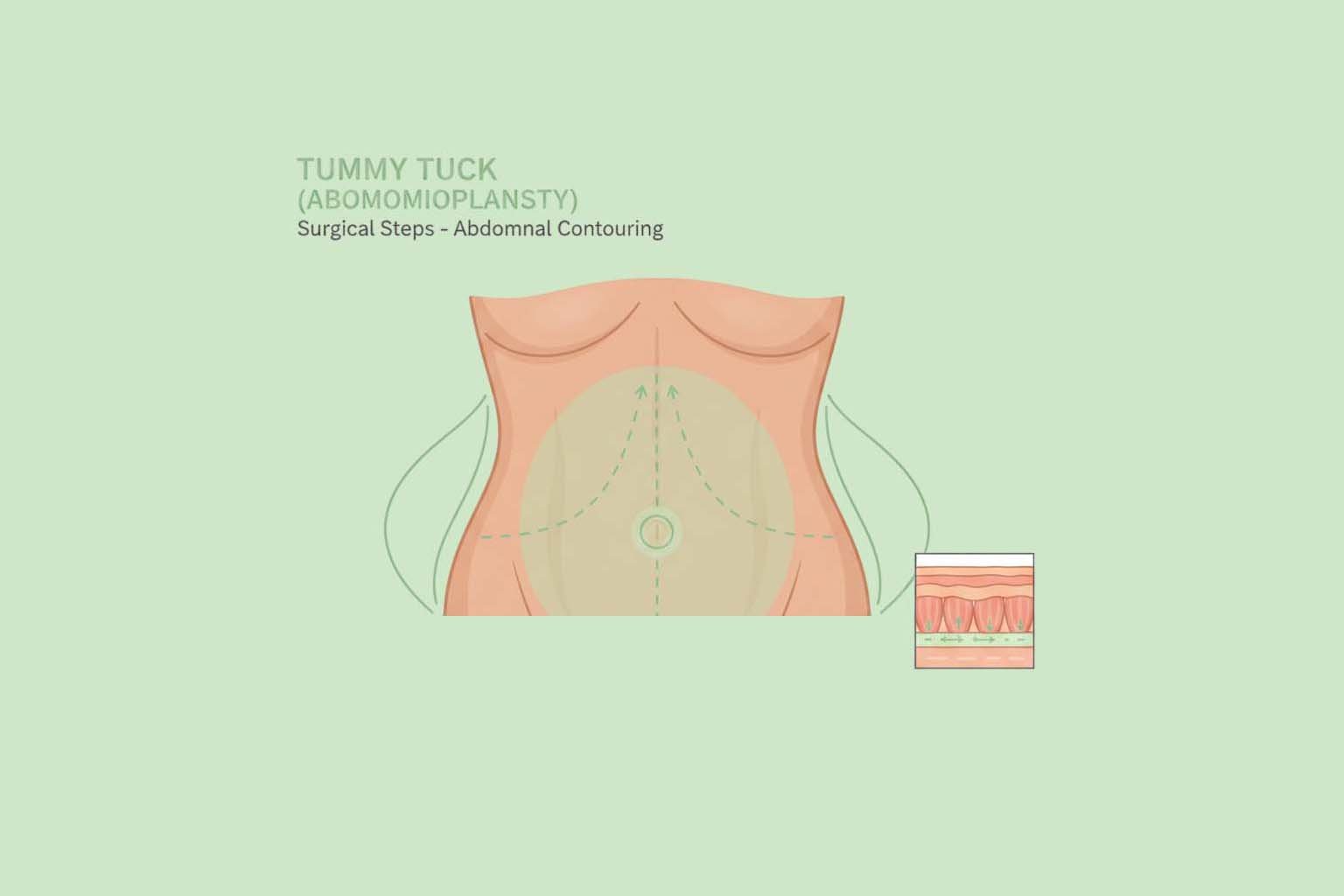
A tummy tuck (abdominoplasty) is a surgical procedure that removes excess abdominal skin and tightens weakened muscles, helping restore a flat, firm, and toned abdomen
Types and Severity of Abdominal Laxity
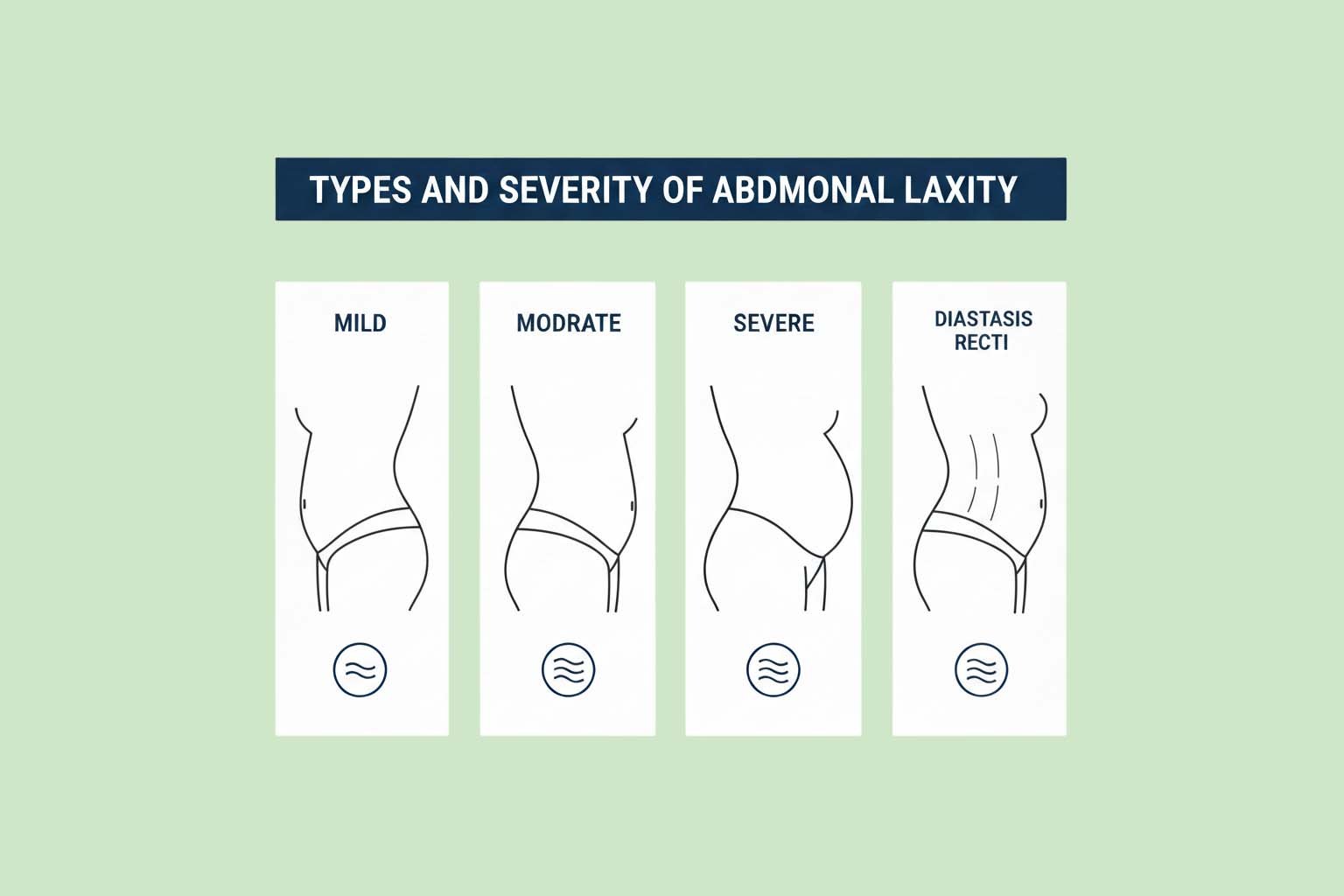
- Mild: Minor skin laxity below the navel, minimal muscle separation
- Moderate: Significant skin excess, moderate muscle diastasis, stretch marks
- Severe: Extensive loose skin, wide muscle separation, pannus (hanging apron of skin)
- Full abdominoplasty: Addresses entire abdomen from ribcage to pubic area
- Mini abdominoplasty: Focuses on area below navel only
Symptoms of Abdominal Laxity
Common signs include:
- Loose, hanging abdominal skin
- Skin folds that trap moisture
- Separated or weak abdominal muscles
- Protruding belly despite healthy weight
- Stretch marks that do not fade
- Difficulty fitting into clothes
- Lower back pain due to weak core muscles
- Skin irritation, rashes, or infections
- Reduced self-confidence
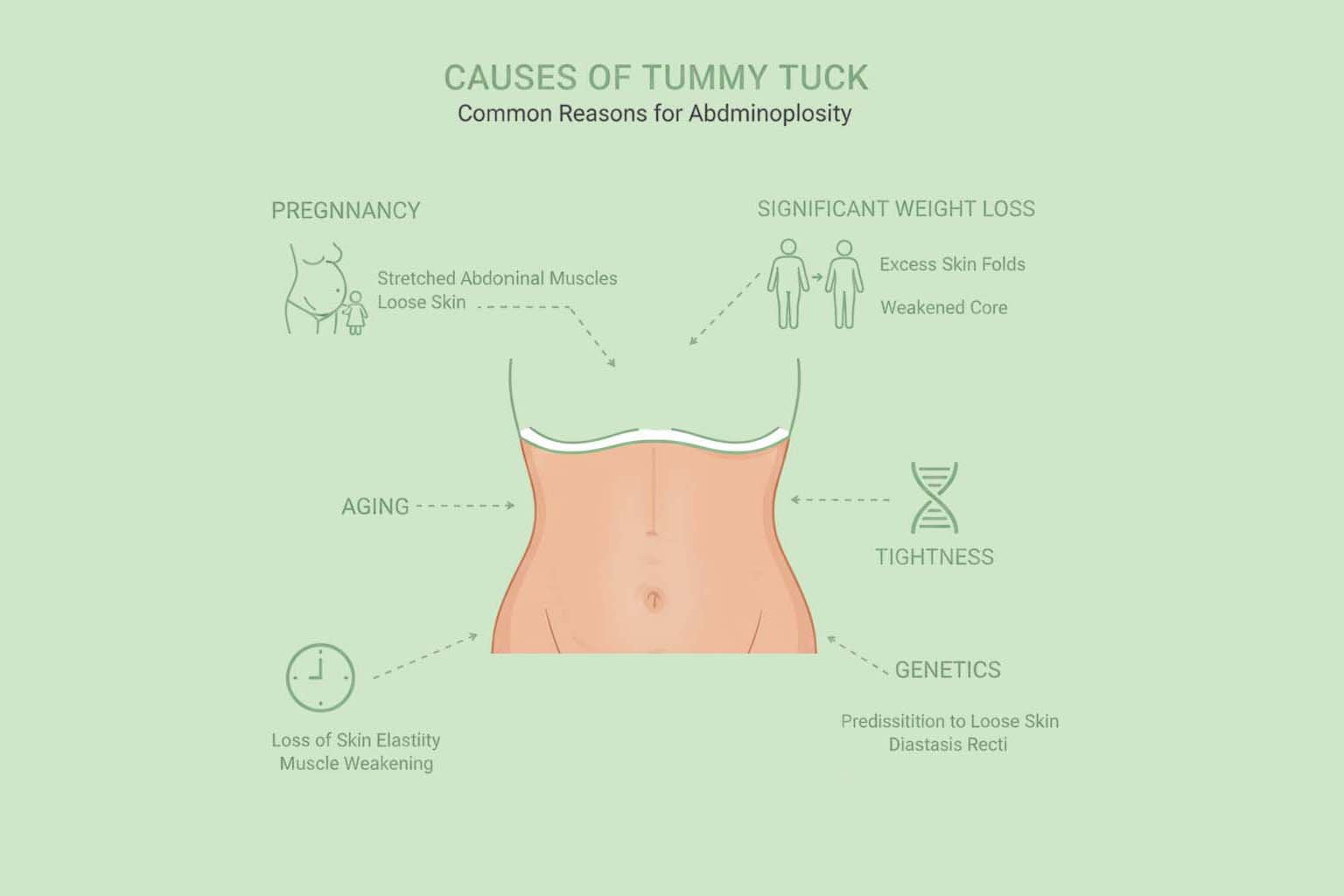
Causes of Abdominal Laxity
Abdominal laxity may develop due to:
- Pregnancy stretching skin and muscles
- Multiple pregnancies
- Significant or rapid weight loss
- Aging and loss of skin elasticity
- Genetic factors affecting skin quality
- C-section scars
- Previous abdominal surgeries
Risk Factors for Needing a Tummy Tuck
You may be at higher risk if you:
- Have had multiple or twin pregnancies
- Experienced major weight loss (50 lbs or more)
- Had pregnancy at an older age
- Have poor skin elasticity due to genetics
- Smoke or have smoked in the past
- Have had previous abdominal surgeries
- Are over 40 years of age
Benefits of Tummy Tuck Surger
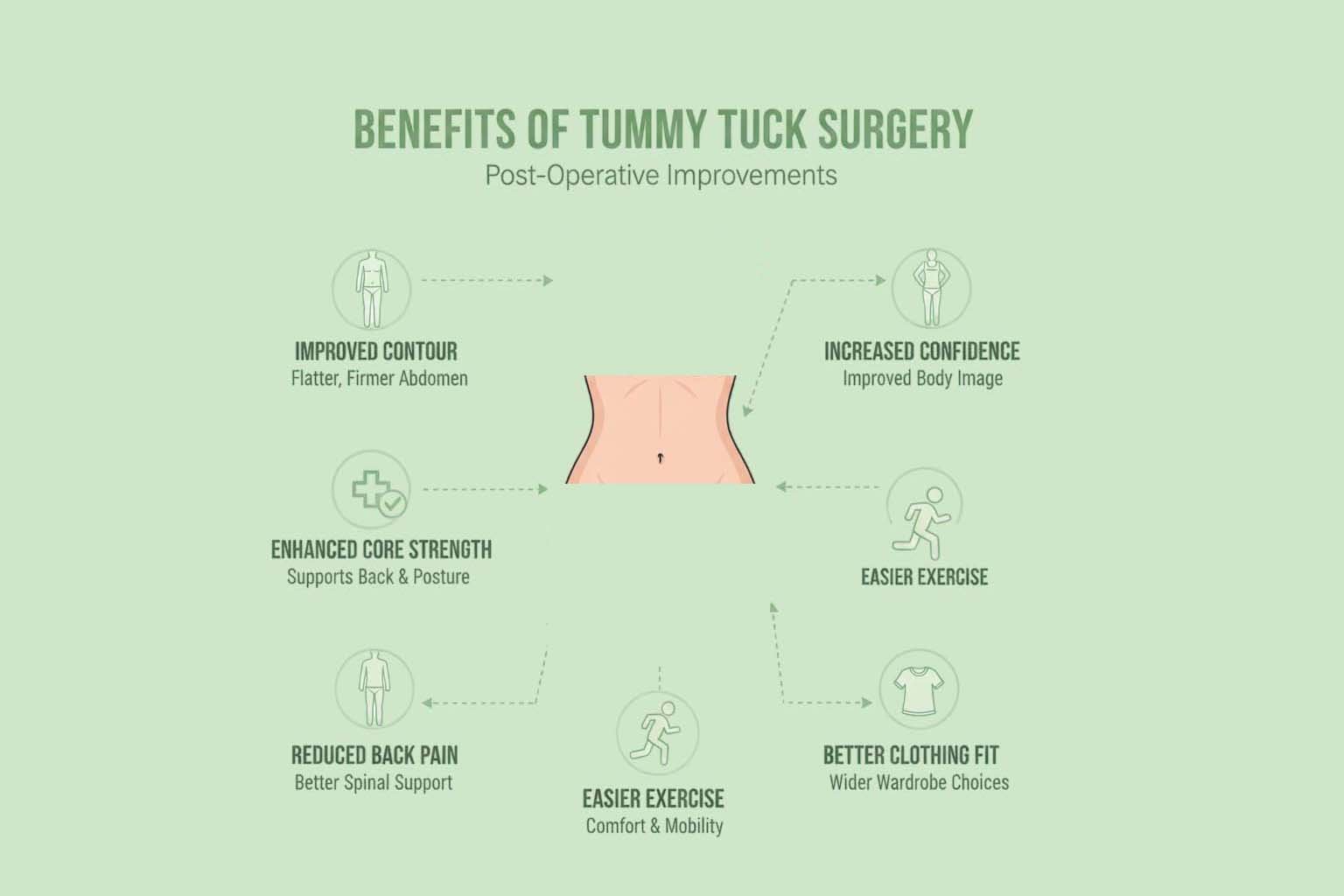
- Removes loose abdominal skin and repairs muscles – Eliminates hanging skin and corrects diastasis recti for a firmer, flatter abdomen.
- Creates a dramatic improvement in body contour – Restores a smooth, toned, and more youthful abdominal appearance.
- Strengthens the core and improves posture – Enhances abdominal strength, spinal support, and daily functional movement.
- Improves comfort, hygiene, and reduces irritation – Eliminates skin folds that cause rashes, infections, and hygiene issues.
- Boosts self-confidence and body image – Reduces embarrassment and increases comfort in social, professional, and intimate settings.
- Long-lasting, high-satisfaction results – One-time procedure for most patients with durable results when weight is maintained.
When Should You See a Doctor?
You should consider consulting a plastic surgeon if:
- Excess abdominal skin affects your daily life
- You have hygiene issues or frequent rashes
- Exercise and diet haven’t improved abdominal shape
- You have completed childbearing
- Your weight has been stable for 6–12 months
- Muscle separation causes pain or weakness
- You have realistic expectations about surgery
- Consider consulting a plastic surgeon when excess abdominal skin affects quality of life, causes hygiene issues or skin problems, exercise and diet haven't restored abdominal contour, you've completed childbearing, you're at stable weight for 6-12 months, muscle separation causes discomfort, or when realistic expectations exist. Medical evaluation ensures you're a suitable surgical candidate.
A medical consultation helps determine whether a tummy tuck is right for you.