What Are Kidney Stones (Renal Calculi / Nephrolithiasis?
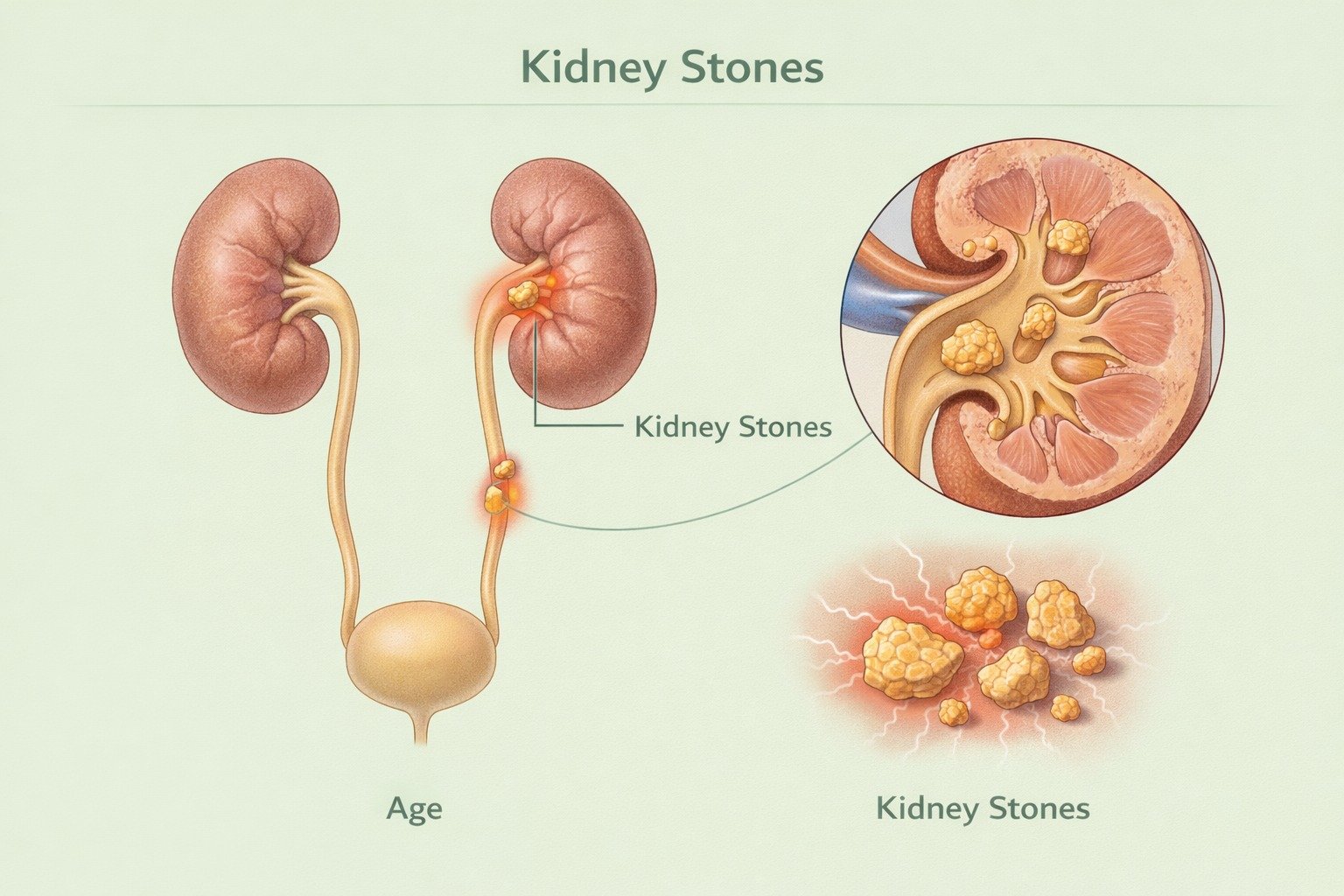
Kidney stones are hard, stone-like deposits made of minerals and salts that form inside the kidneys. They develop when urine becomes too concentrated, allowing these minerals to crystallize and stick together.
Kidney stones can be as small as a grain of sand or as large as a golf ball. They may form anywhere in the urinary tract, including the kidneys, ureters, bladder, or urethra. Passing a kidney stone can be extremely painful, but early diagnosis and proper treatment usually prevent long-term damage.
Types of Kidney Stones
Calcium stones (most common - 80%): Calcium oxalate or calcium phosphate
Uric acid stones: Form in people with high protein diet, gout, or genetic factors
Struvite stones: Result from urinary tract infections, can grow quickly
Cystine stones: Rare, result from hereditary disorder causing kidneys to excrete too much cystine
Size classification: Small (<5mm likely to pass), medium (5-10mm), large (>10mm may require intervention)
Symptoms of Kidney Stones
Many kidney stones cause no symptoms until they begin to move. Common symptoms include:
Severe, sharp pain in the side or back below the ribs
Pain that spreads to the lower abdomen or groin
Pain that comes in waves and changes in intensity
Blood in urine (pink, red, or brown urine)
Cloudy or foul-smelling urine
Nausea and vomiting
Frequent urge to urinate
Passing small amounts of urine
Fever and chills (if infection is present)
Causes of Kidney Stones
Kidney stones may form due to:
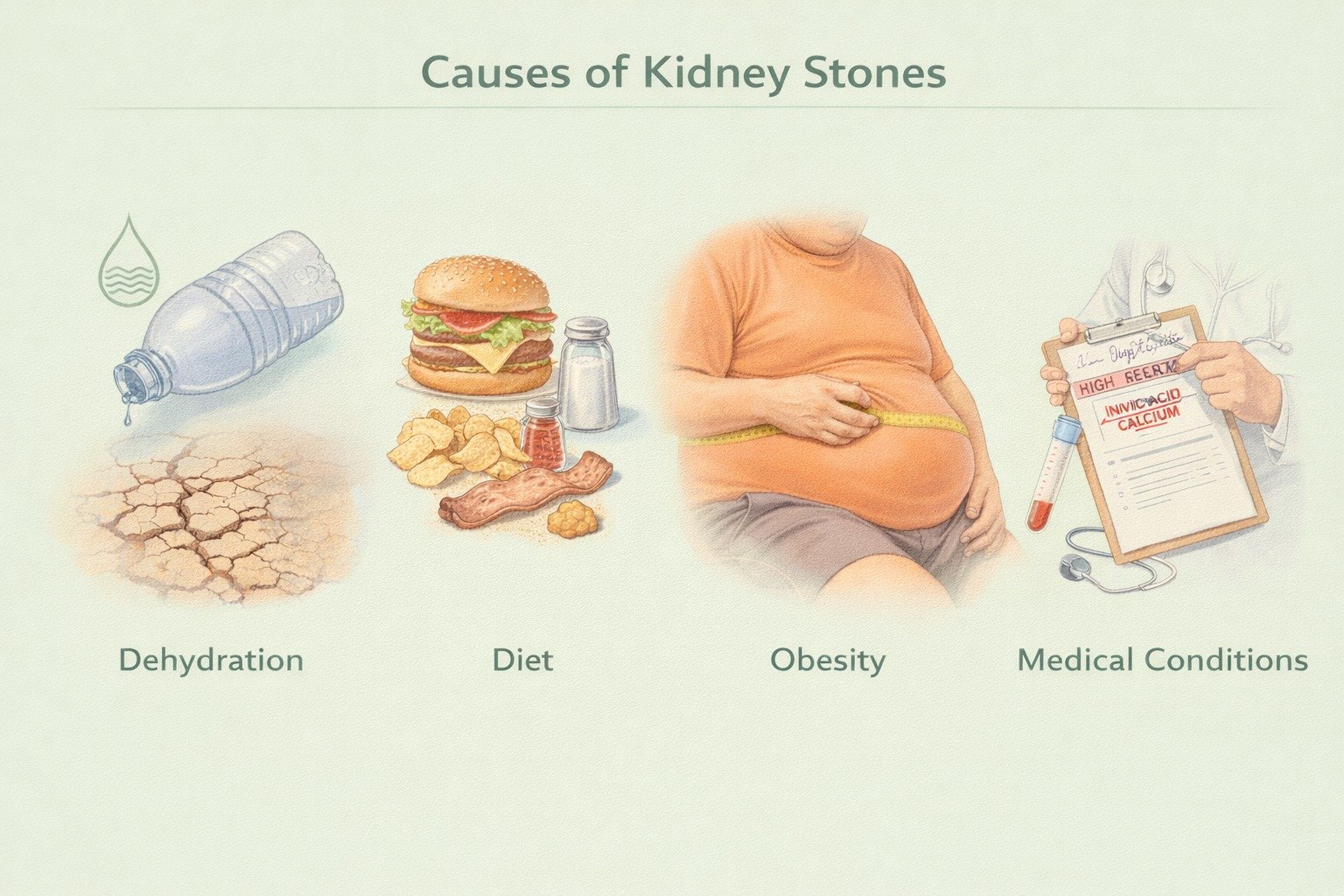
Drinking too little water (dehydration)
Diet high in protein, salt, or sugar
Obesity
Digestive disorders or bowel surgery affecting absorption
Certain medical conditions (UTIs, renal tubular acidosis)
Family history or genetic factors
Excess vitamin D or calcium supplements
Certain medications
Hot climates causing excessive fluid loss
Risk Factors
You may be at higher risk if you have:
Personal or family history of kidney stones
Chronic dehydration
High-protein or high-salt diet
Obesity
Digestive diseases or chronic diarrhea
Previous gastric bypass surgery
Polycystic kidney disease
Hyperparathyroidism
Certain urinary infections
Long-term use of specific medications
Diagnosis and Treatment
Doctors diagnose kidney stones using:
Urine tests
Blood tests
Imaging (CT scan or ultrasound)
Treatment depends on stone size and location:
Small stones: Pain medicines and increased fluid intake
Medium stones: Medical therapy or minor procedures
Large stones:
Shock Wave Lithotripsy (ESWL)
Ureteroscopy
Percutaneous or surgical removal
Analyzing the stone type helps doctors create a personalized prevention plan to reduce future stone formation.
Kidney stones are common but highly treatable. While they can cause intense pain, early diagnosis, proper treatment, and lifestyle changes can prevent complications and future stones. Staying hydrated and following medical advice are the most effective ways to protect kidney health.

When to See a Doctor
Seek emergency medical care if you have:
Severe pain that won’t improve
Pain with nausea and vomiting
Fever and chills with urinary pain
Blood in urine
Trouble passing urine or inability to urinate
Schedule a doctor’s visit if:
You have repeated kidney stones
Frequent urinary tract infections
A family history of kidney stones
Existing kidney disease