Previous abdominal surgery Poor healing of the surgical wound Infection at the surgery site Heavy lifting too soon after surgery Multiple surgeries in the same area Weak stitches or sutures Increased pressure in the abdomen
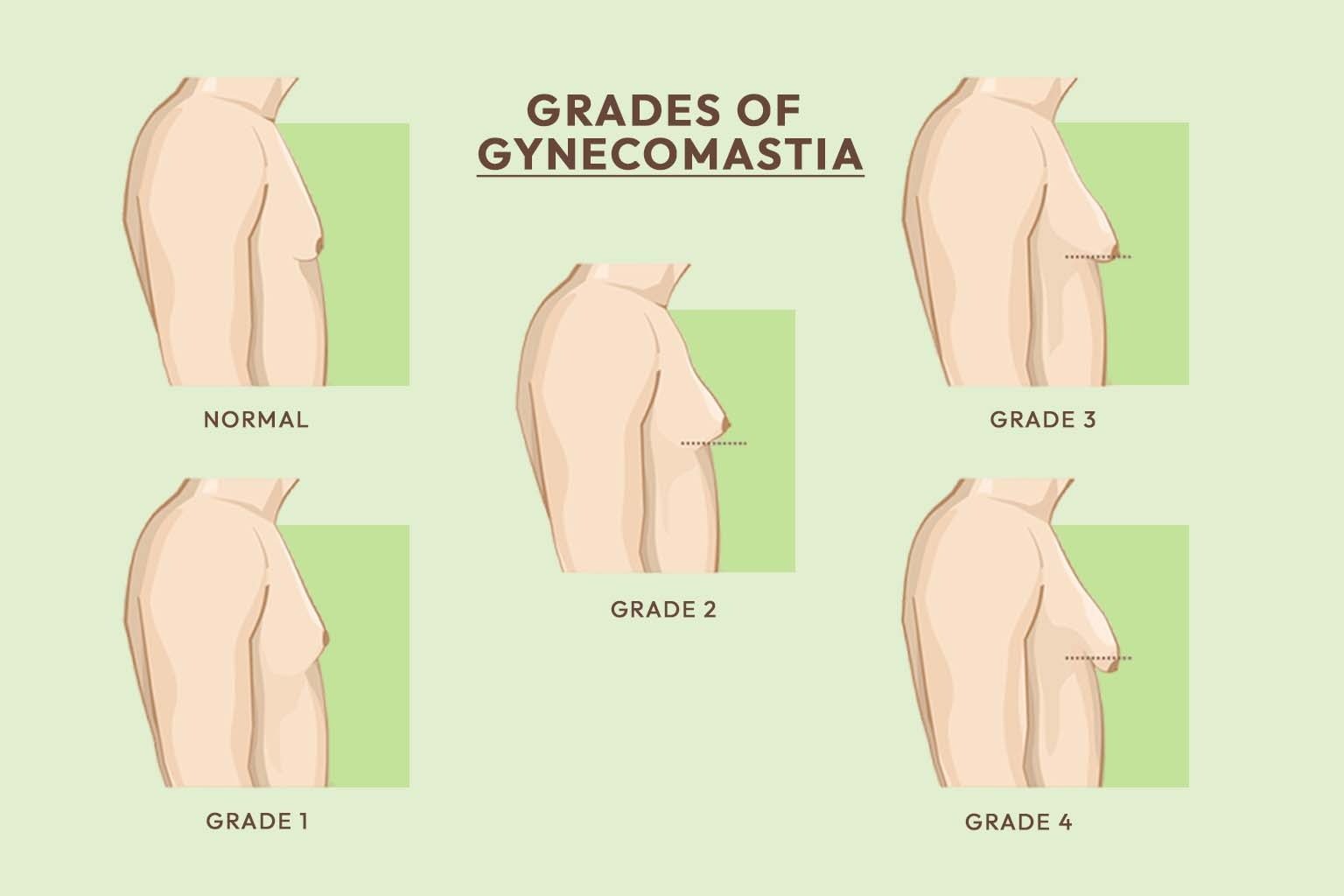
Grades of Gynecomastia
Grade I
Minor breast enlargement, no excess fat
Grade II
Moderate breast enlargement with some excess fat
Grade IlI
Moderate breast enlargement with excess fat and skin
Grade IV
Large breast enlargement with excess skin, similar to female breast sagging
Gynecomastia is classified based on severity:
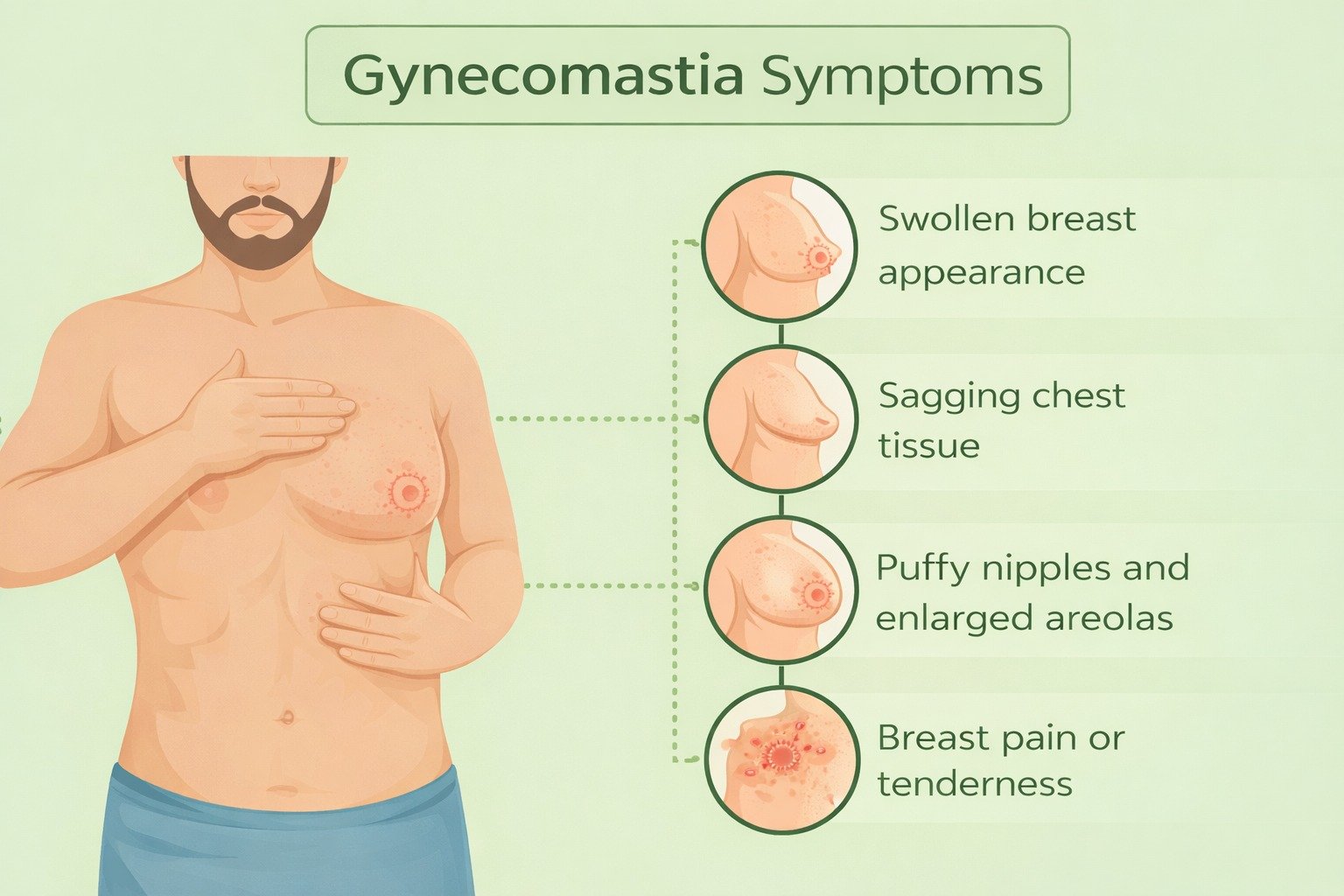
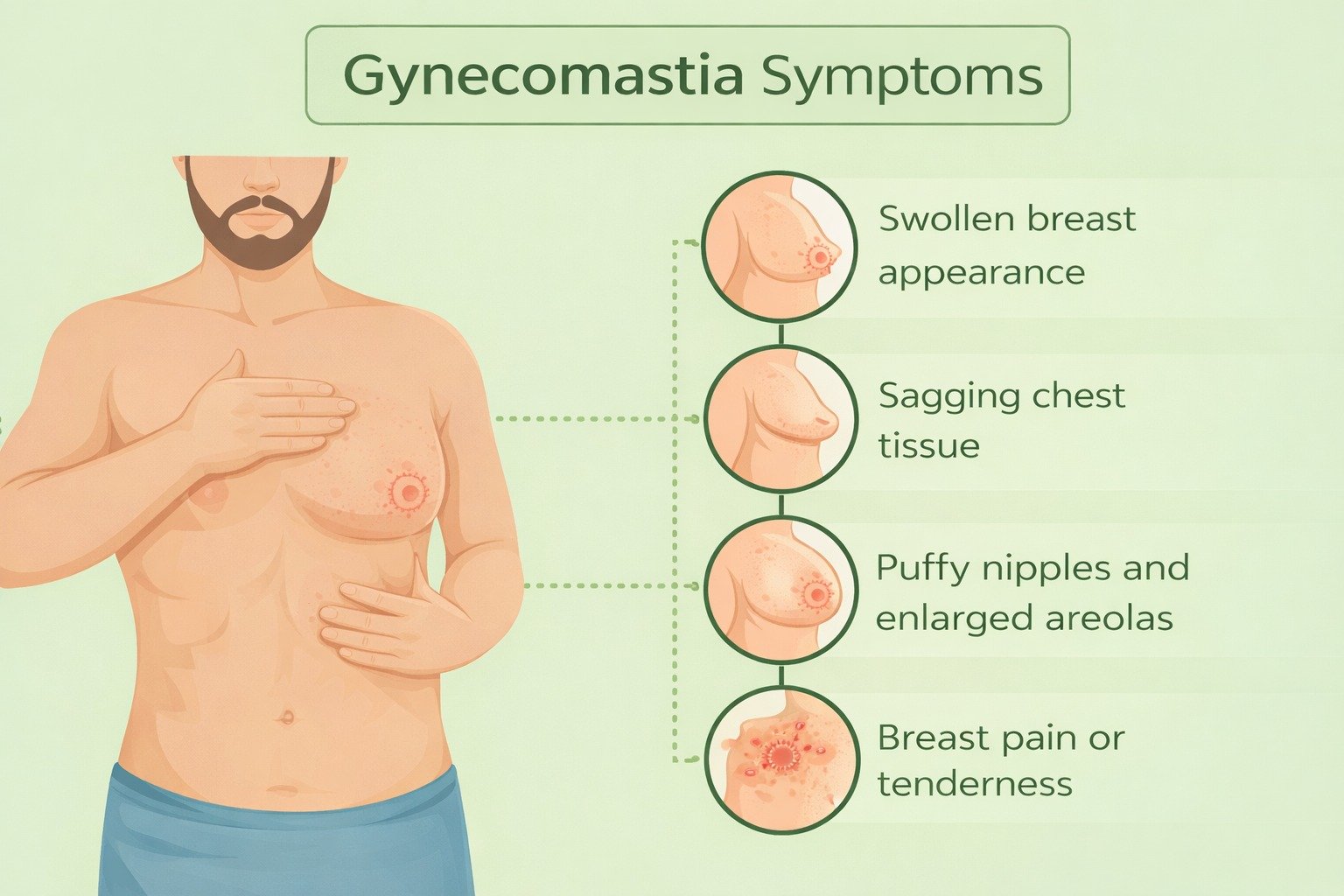
Common signs include:
Swollen or enlarged breast tissue
Breast tenderness or pain
Uneven or asymmetrical chest appearance
Nipple discharge (rare but important to evaluate)
Lump may be painful and appearance of blood.
Symptoms of Gynecomastia
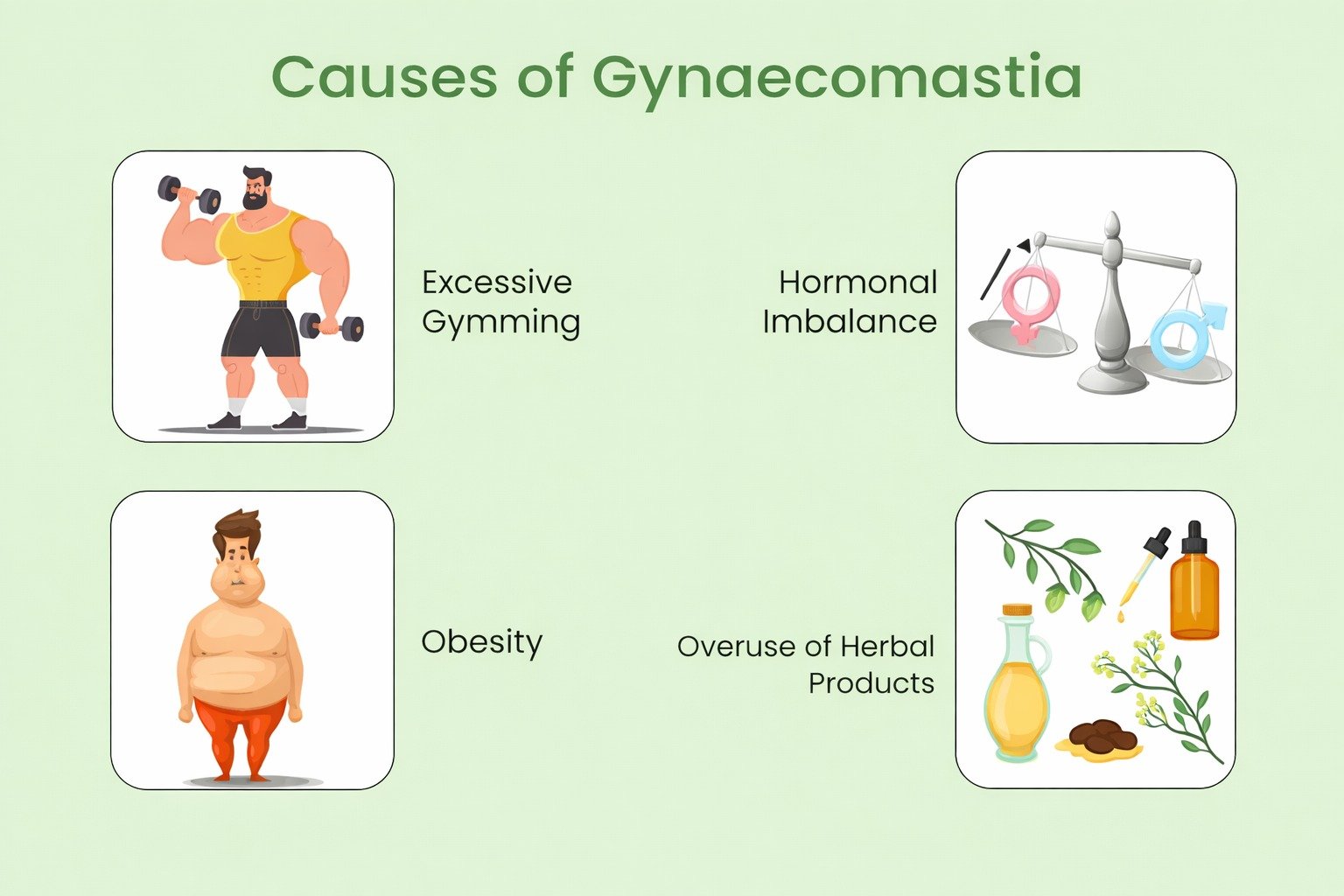
Gynecomastia can develop due to:
Hormonal changes during puberty or aging
Certain medications (steroids, anti-androgens, antidepressants, ulcer drugs)
Obesity and excess body fat
Low testosterone levels (hypogonadism)
Excessive alcohol consumption
Use of anabolic steroids or recreational drugs
Causes of Gynecomastia
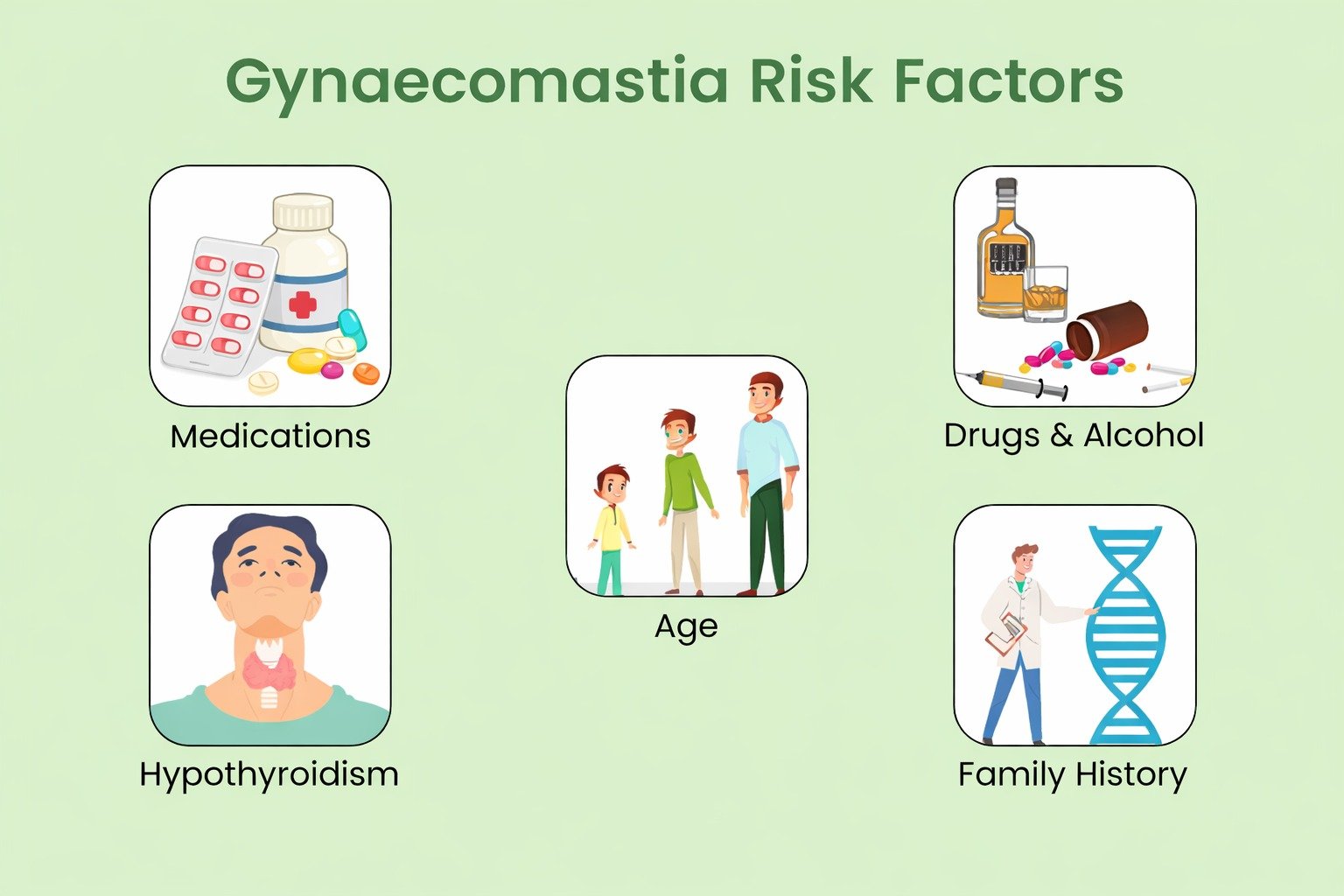
You may be at higher risk if you:
Thyroid disease
Obesity
Certain Medications
Cirrhosis
Kidney Failure
Tumors that impact hormones
Breast Cancer
Risk Factors for Gynecomastia
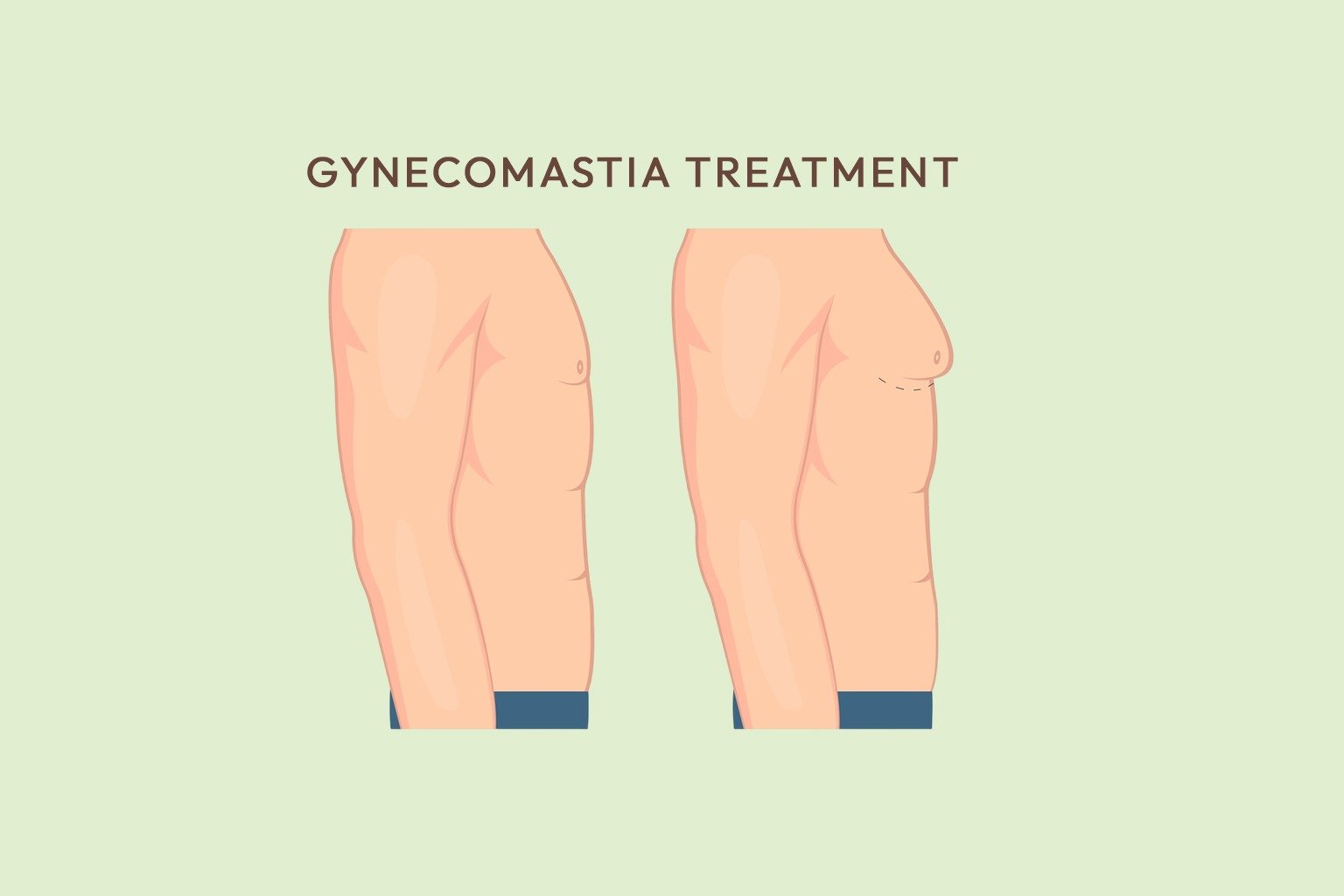
Benefits of Gynecomastia Treatment
Creates a flat, masculine chest shape
Tightens loose chest skin
Reduces embarrassment and social anxiety
Allows wearing fitted clothes comfortably
Minimal scarring with modern surgical techniques
Quick recovery and minimal downtime
Prevents long-term psychological stress
Benefits of Gynecomastia Treatment
You should consult a doctor if:
You notice breast swelling or pain
There is nipple discharge
The condition causes emotional distress or embarrassment Seek medical attention if you notice breast swelling, pain, tenderness, or nipple discharge. Consult a doctor if the condition causes significant psychological distress, doesn't resolve naturally within two years during adolescence, or if you suspect medication side effects. Immediate evaluation is needed for sudden changes or accompanying symptoms like testicular lumps.
Early evaluation helps rule out serious conditions and decide the right treatment.