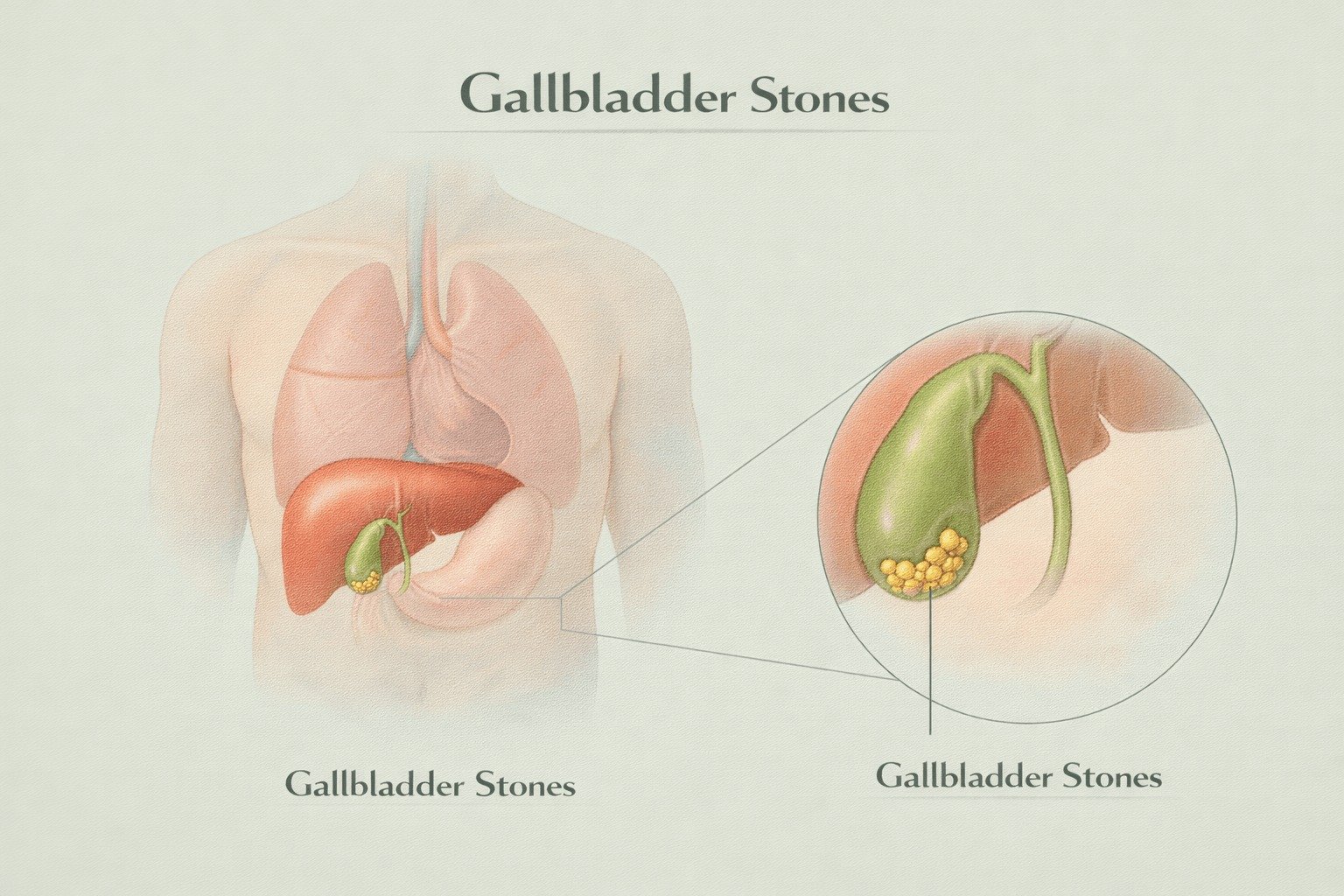
What Are Gallstones?
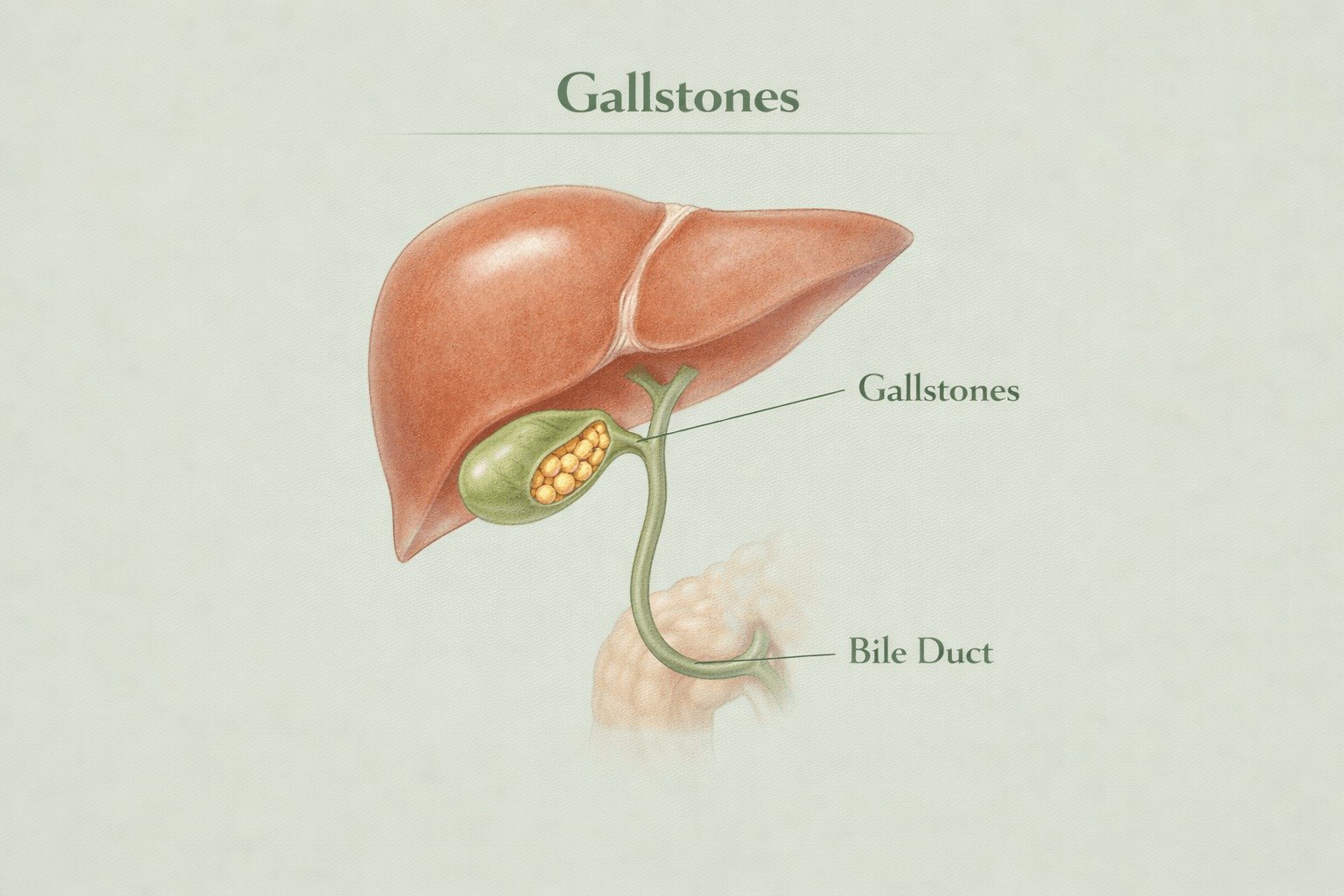
Gallstones are hardened deposits of digestive fluid (bile) that form in the gallbladder, a small pear-shaped organ beneath the liver on the right side of the abdomen. The gallbladder stores bile, which helps digest fats.
Gallstones can be tiny like sand or as large as a golf ball, and there may be one stone or hundreds. Many people have silent gallstones with no symptoms, while others experience painful attacks and complications.
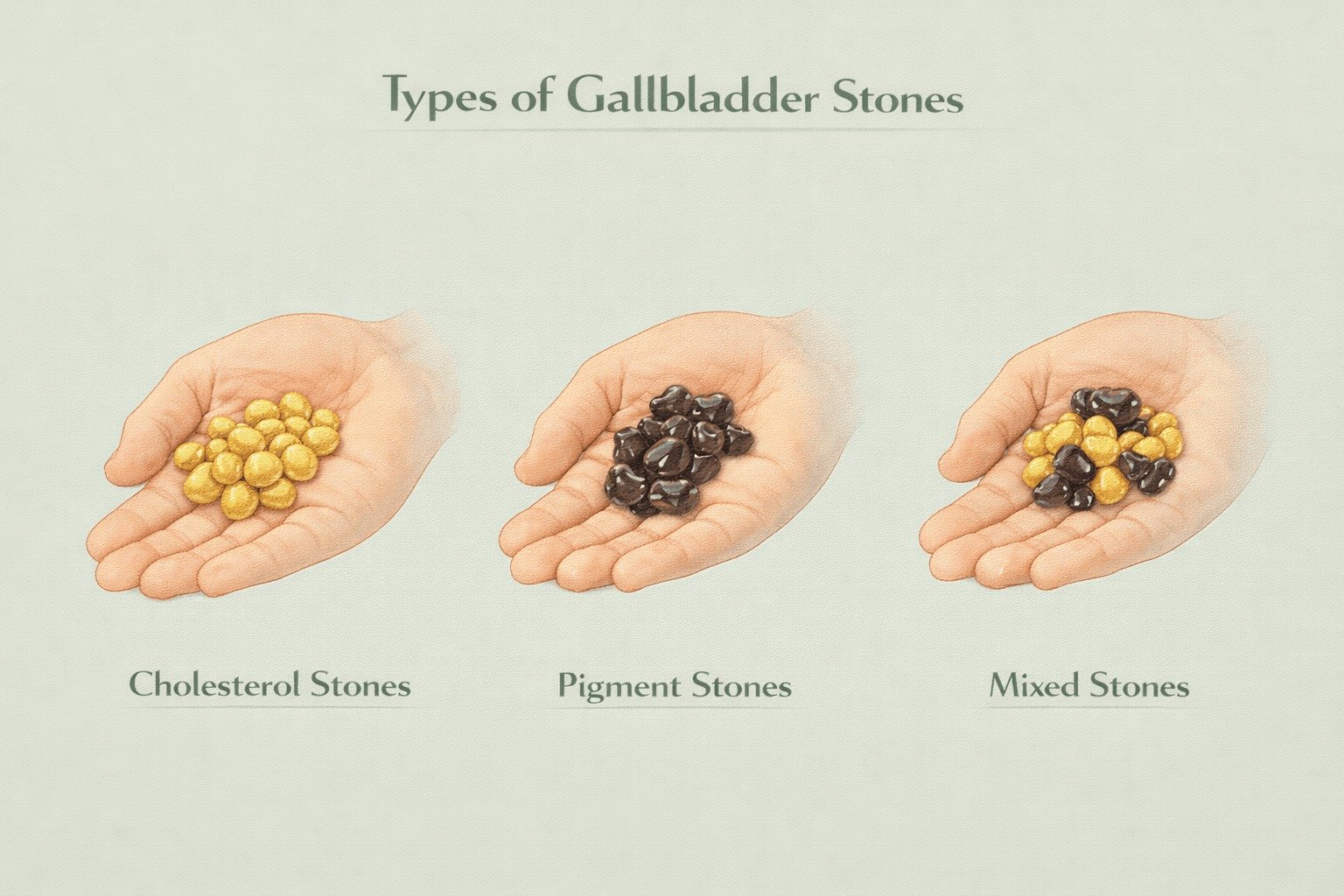
Types of Gallstones
Cholesterol Stones – Yellow-green, most common (≈80%), formed from excess cholesterol.
Pigment Stones – Dark brown or black, formed from excess bilirubin.
Mixed Stones – Combination of cholesterol and pigment.
Classification
Size: Small (<5mm), Medium (5–10mm), Large (>10mm)
Symptoms: Symptomatic (cause pain) vs Asymptomatic (silent stones)
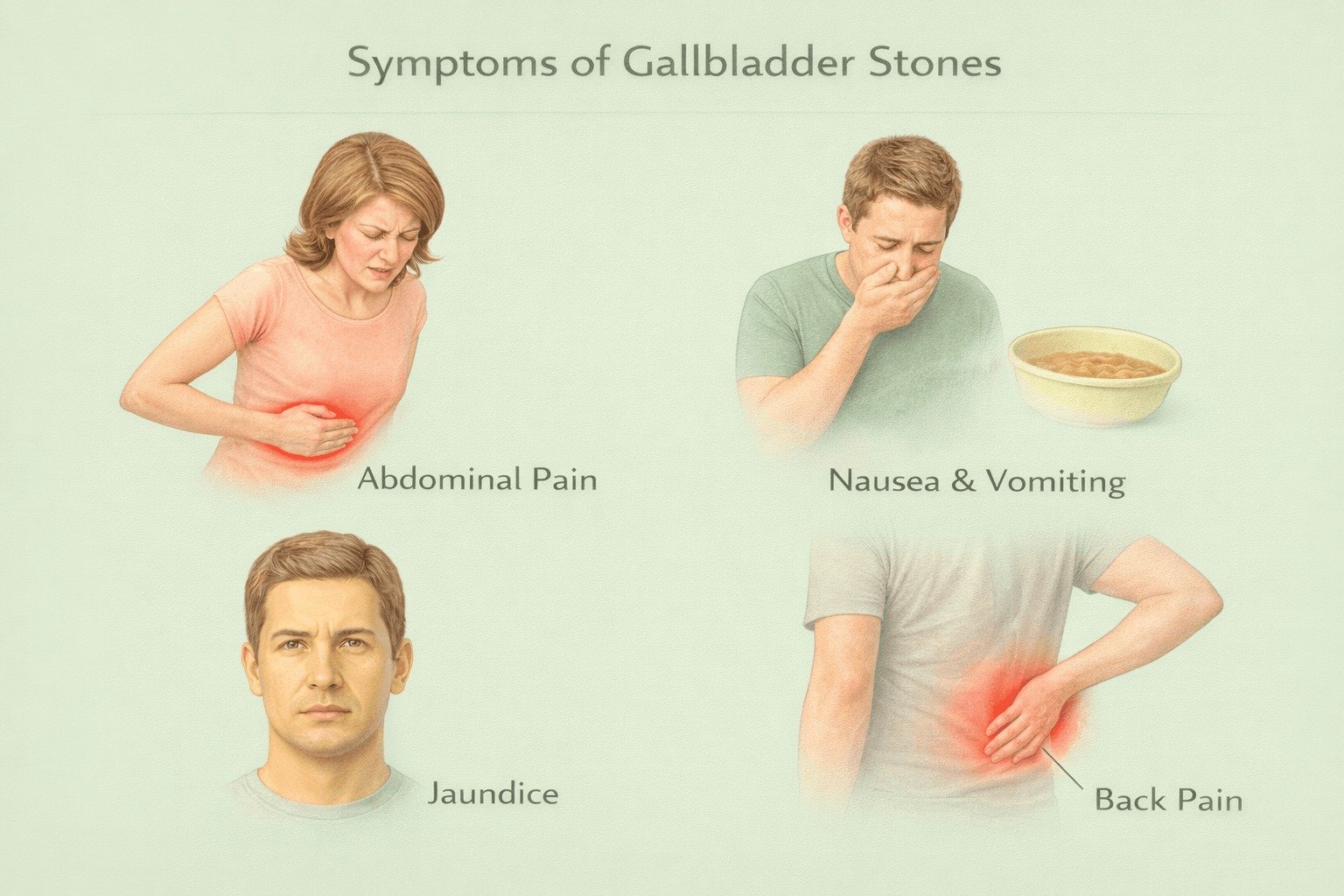
Symptoms of Gallstones
Many gallstones cause no symptoms, but when present, you may notice:
Sudden, severe pain in the upper right abdomen (“gallbladder attack”)
Pain between shoulder blades or in the right shoulder
Pain in the center of the abdomen below the breastbone
Nausea and vomiting
Indigestion, bloating, or fullness
Pain triggered by fatty meals
Jaundice (yellowing of skin/eyes) if bile duct is blocked
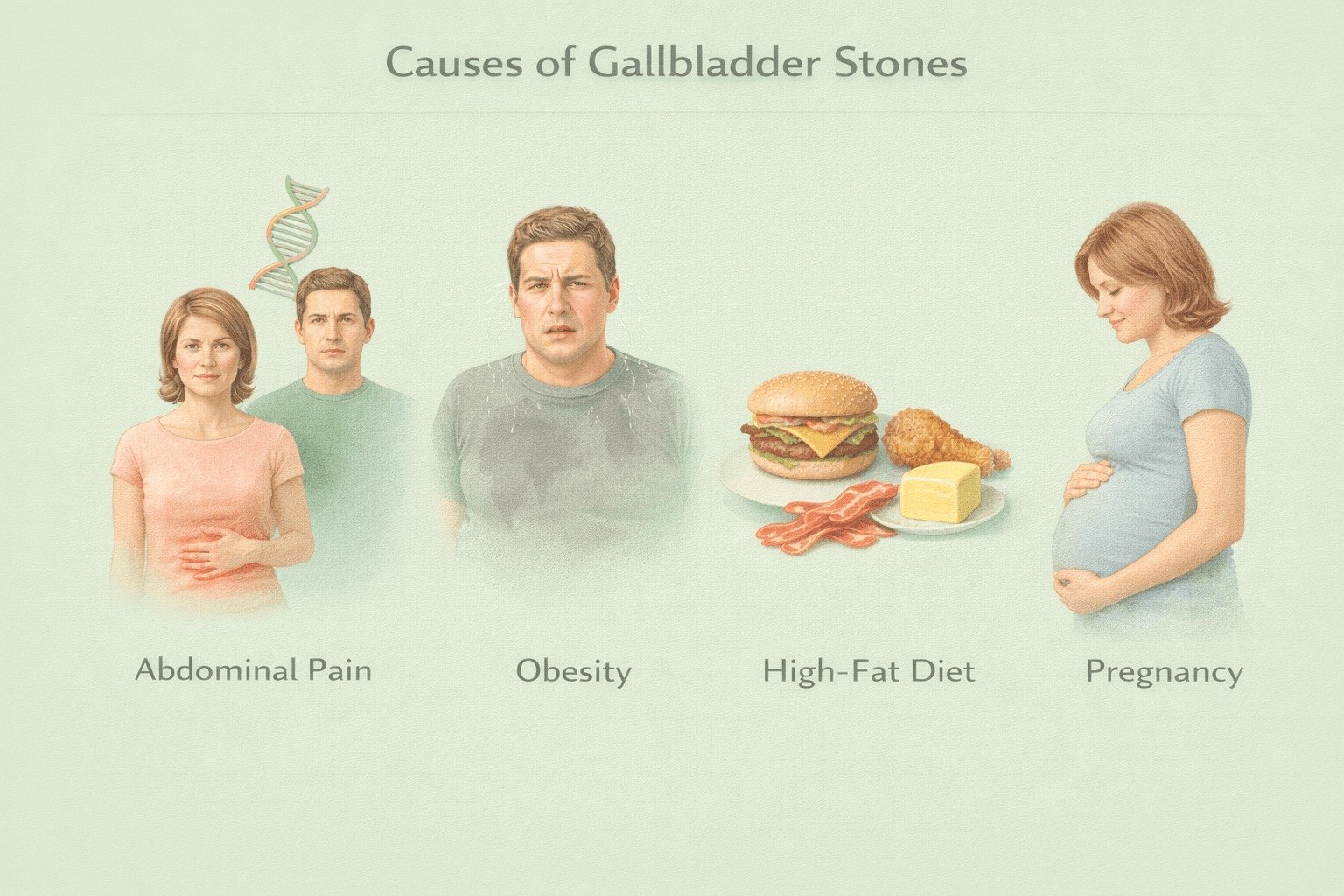
Causes of Gallstones
Excess cholesterol in bile that cannot dissolve
Excess bilirubin from liver disease or blood disorders
Poor or incomplete emptying of the gallbladder
Bile concentration from fasting or rapid weight loss
Genetics and family history
Hormonal changes affecting bile composition
Risk Factors
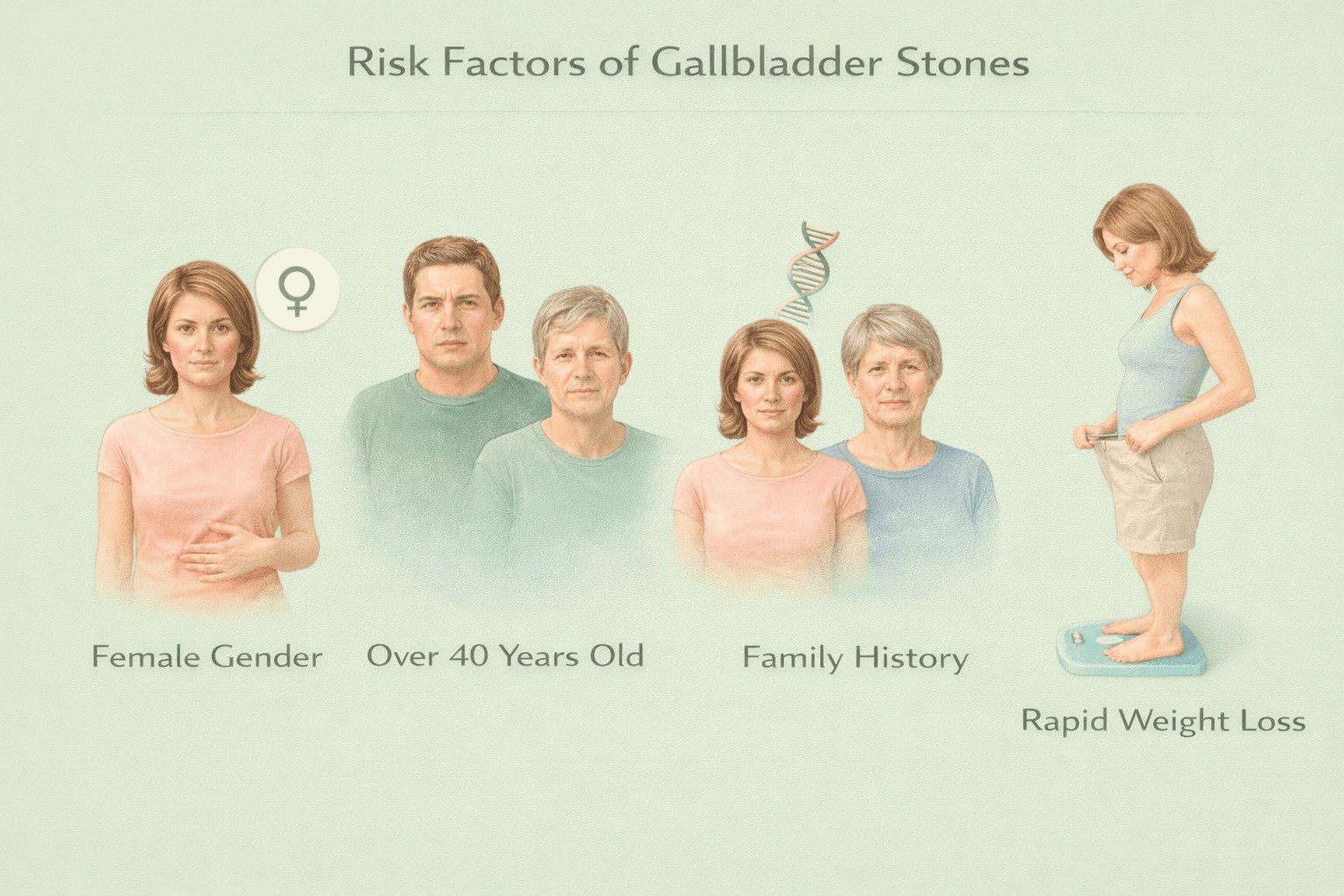
Female gender and age >40
Obesity or overweight
Pregnancy and hormonal changes
Rapid weight loss or dieting
Family history of gallstones
Certain ethnicities (Native American, Hispanic)
Diabetes or liver disease
Blood disorders (e.g., sickle cell anemia)
Sedentary lifestyle
High-fat, low-fiber diet
Benefits of Gallstone Treatment (Cholecystectomy)
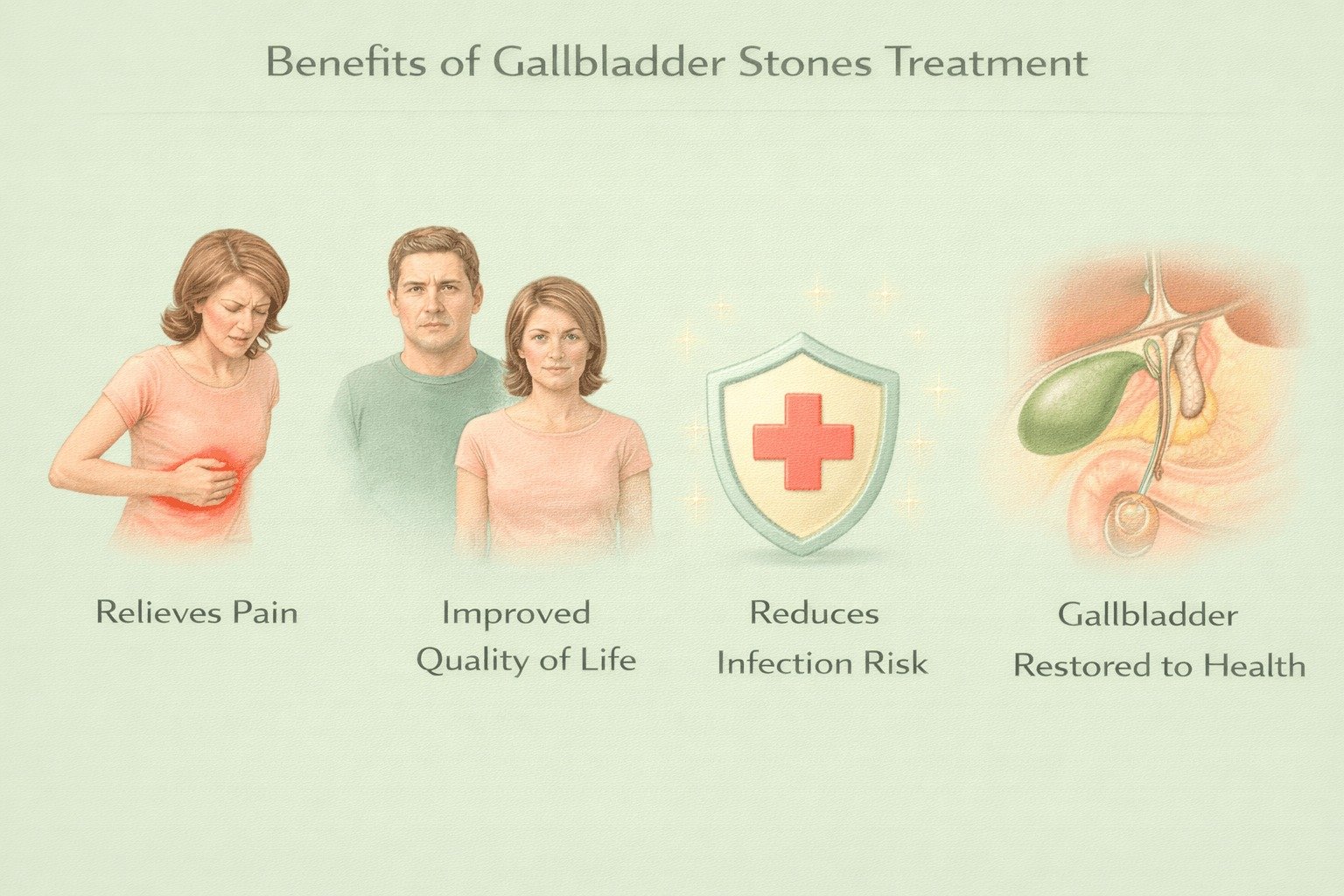
Eliminates painful gallbladder attacks – Stops biliary colic, severe abdominal pain, nausea, vomiting, and digestive discomfort.
Prevents serious and life-threatening complications – Avoids cholecystitis, pancreatitis, bile duct obstruction, infection, and emergency surgery.
Permanent solution for gallstones – Gallbladder removal prevents recurrence and repeated hospitalizations.
Minimally invasive surgery with fast recovery – Laparoscopic procedure with small incisions, less pain, minimal scarring, and quicker return to normal life.
Restores quality of life and normal eating – Enables eating without fear, improves sleep, reduces stress, and supports social activities.
Safe and effective with high success rates – Proven, cost-effective treatment with excellent long-term outcomes and patient satisfaction.
When to See a Doctor
Seek emergency care if:
Severe abdominal pain lasting hours
High fever with chills
Yellowing of skin or eyes (jaundice)
Dark urine or pale stools
Severe nausea preventing eating or drinking
Seek emergency care for intense abdominal pain lasting several hours, high fever with chills, yellowing of skin or whites of eyes (jaundice), dark urine or pale stools, or severe nausea preventing eating or drinking. Schedule a doctor's visit for recurring digestive discomfort after eating, especially fatty foods, or if you suspect gallstones. Diagnosis typically involves ultrasound, and treatment ranges from watchful waiting for asymptomatic stones to surgical removal of the gallbladder (cholecystectomy) for symptomatic cases.